
Homeschool Music Programs: What Are They (and What to Look For)
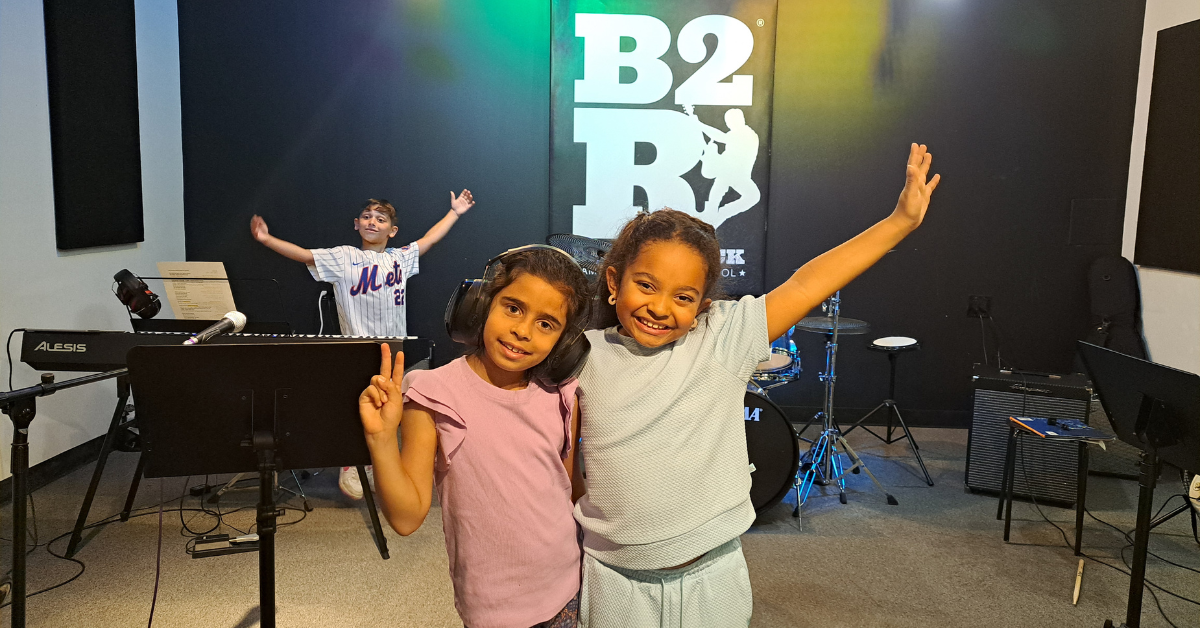
If you’re homeschooling, you already know the best “curriculum” is the one your child will actually stick with. Music is one of those rare subjects that can bring structure and joy to your week without requiring a ton of prep.
For many families, it’s easier to incorporate into your homeschool routine when there’s a consistent weekly anchor, like Bach to Rock group classes or private lessons, to guide progress and keep momentum going.
What is a homeschool music program?
A homeschool music program is simply a steady plan for learning music over time—whether that’s learning an instrument, building musical foundations like rhythm and reading notes, or getting confident performing.
Some families do everything at home, but many prefer a program (like Bach to Rock) that gives their child clear instruction and gives parents an easier routine to follow between sessions. Plus, they get to learn from professional, skilled musicians and socialize!
Why Music Fits Homeschool So Well
Music works so great for homeschooling families because it’s hands-on and confidence-building. It breaks up book-heavy days, gives kids a creative outlet, and provides progress you can actually see and hear.
That’s one reason homeschoolers often do well in environments like Bach to Rock, where learning feels active and kids can eventually take what they’re practicing and use it in a group class or performance setting.
What to Look For in a Great Homeschool Music Program
Here are the most important things to look for (and why they matter).
1. A clear path from beginner to confident musician
You want a program that helps your child build skills in the right order—so it doesn’t feel random or frustrating. In structured lessons (like Bach to Rock private lessons), that path is usually built in: skills first, songs second, and progress that feels achievable.
2. Teachers who are great with kids
A teacher can be an incredible musician and still not be the right fit for children. The best programs have instructors who know how to build confidence, adjust to different personalities, and keep lessons moving at a kid-friendly pace. That “coach” feeling is a big part of why families choose places like Bach to Rock—kids feel encouraged, not pressured.
3. Consistency that creates routine (without making life harder)
Homeschool schedules are flexible, which is a huge benefit—but it also means subjects can slip through the cracks. A weekly lesson or group class at Bach to Rock can create a dependable rhythm, and practice at home becomes easier because your child knows what they’re working toward each week.
4. The option to learn with others
Even if your child starts with private lessons, it’s helpful when a program also offers a next step that includes community—because group learning can be a big motivation boost. Bach to Rock’s group classes and band programs can be a great fit for homeschoolers who want connection, teamwork, and the fun of making music with peers.
5. A program that builds confidence—not perfection
A good program should feel supportive. Progress in music is rarely instant, especially in the beginning, and kids need an environment that celebrates effort and small wins. This is something we focus on in our music schools because confidence is what keeps kids coming back—and what helps skills grow long-term.
6. A practical fit for your homeschool lifestyle
This part is underrated: if it’s hard to schedule, it won’t last. Look for a program that fits naturally into your routine and makes it easy to keep going. Many homeschool families like Bach to Rock because it provides structure without requiring parents to plan, teach, and track every detail themselves.
Everything can be tracked right in the MyB2R app like progress through our program and the skills they’ve mastered. Kids can even earn badges and rewards just for practicing!
Related Article: Practicing Music at Home is Now Fun and Rewarding
Signs You’ve Found the Right Fit
You’ll usually know it’s working when your child starts showing little “proof points,” like:
- They want to show you what they learned.
- Practice becomes less of a battle.
- They’re proud of progress (even small progress).
What you want is steady improvement and a child who feels capable. For many homeschool families, the simplest low-stress rhythm looks like this:
- One weekly anchor (a group class or private lesson—like at Bach to Rock)
- Two short practices at home (10–15 minutes is plenty)
- One “fun music day” (listening, rhythm games, or playing along to a favorite song)
It doesn’t have to be complicated to be effective. A homeschool music program is really just consistency, encouragement, and the right support so your child can build real skills and actually enjoy the process.